
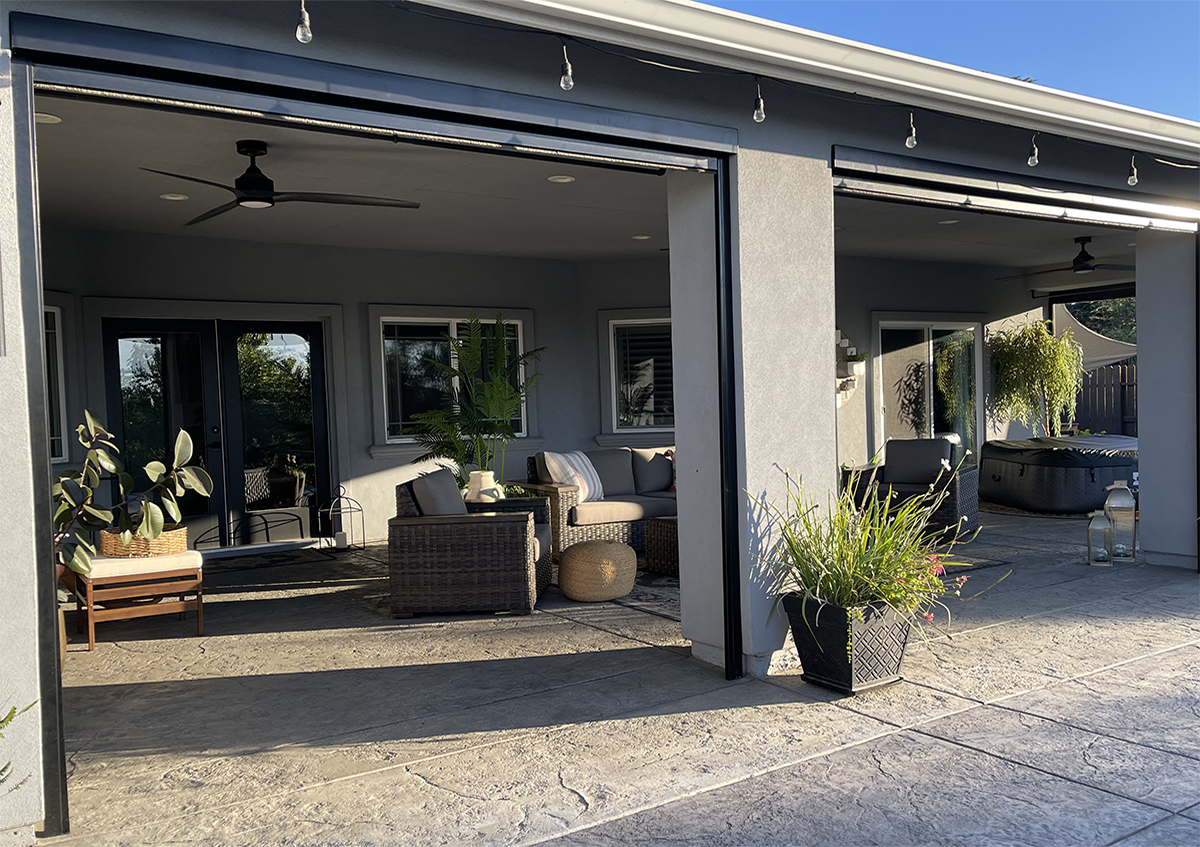
Can You Install a Garage Screen Yourself? DIY vs. Professional Installation
Installing a garage screen is one of the simplest ways to make your garage more comfortable and useful. Whether you want to turn the space into a workshop, home gym, hobby room, or relaxing area, a garage screen allows fresh air to circulate while helping keep mosquitoes, flies, and other insects outside.
But before purchasing a screen, there’s an important question to consider: Can you install a garage screen yourself, or should you hire a professional?
The answer depends on the type of garage screen, the size of your opening, and your experience with home improvement projects.
Some garage screens are designed for straightforward DIY installation. Others, particularly custom retractable garage screens and motorized systems, require precise measurements, specialized mounting hardware, and careful alignment.
A simple magnetic screen might take less than an hour to install. A large retractable garage screen can be a considerably more involved project.
Understanding the differences between DIY garage screen installation and professional installation will help you make the right decision for your home, budget, and long-term needs.
Can You Install a Garage Screen Yourself?
Yes, you can install certain types of garage screens yourself. However, not every garage screen is suitable for DIY installation.
Temporary magnetic screens, removable mesh panels, and some manual garage screen kits are designed with homeowners in mind. These products often use basic mounting hardware and require only common household tools.
Custom retractable garage screens can be more challenging.
Unlike a temporary mesh curtain, a retractable screen must fit the opening accurately and move smoothly through its guide system. Incorrect measurements or mounting alignment can affect how the screen opens, closes, and retracts.
Motorized garage screens introduce additional considerations because they include electrical components, motors, and control systems.
Before deciding to install a garage screen yourself, consider three factors: the screen’s installation requirements, the condition of your garage opening, and your ability to complete the work safely.
For a basic screen, DIY installation may be practical. For a large, custom, or motorized retractable system, professional installation is often the better choice.
Understanding the Different Types of Garage Screens
The installation process depends heavily on the type of garage screen you choose.
Some screens attach directly to the garage opening, while others require permanent mounting hardware and carefully positioned guide tracks.
Magnetic Garage Door Screens
Magnetic garage screens are among the easiest options for homeowners to install.
These screens generally consist of flexible mesh panels that attach around the garage opening using hook-and-loop fasteners, adhesive strips, or other mounting methods.
Many feature a center opening that closes with magnets after someone walks through.
Installation typically involves cleaning the mounting surface, measuring the opening, positioning the mesh, and securing the attachment points.
Magnetic screens are popular because they are affordable and relatively easy to remove.
However, they may not provide the same durability, appearance, or convenient full-opening access as a retractable garage screen.
Retractable Garage Screens
Retractable garage screens use a mechanism that allows the mesh to extend across the garage opening and retract into a housing when not needed.
Depending on the design, the screen may move vertically or use another guided operating system.
These screens offer several practical advantages.
They can remain out of sight when not in use, allow vehicles to enter and exit when retracted, and provide a more integrated appearance than many temporary screening products.
Installation is more involved because the housing, guide tracks, and operating components must be positioned correctly.
Some manual retractable screen products are suitable for experienced DIY homeowners. Others are designed for professional installation.
Motorized Garage Screens
Motorized garage screens use an electric motor to extend and retract the screen.
They are especially useful for double-car garages, oversized openings, and homeowners who want convenient operation.
Depending on the product, a motorized screen may use a wall switch, remote control, or compatible automation system.
Installation may involve mounting the housing, aligning the tracks, configuring the motor, and completing electrical connections.
Because these systems combine mechanical and electrical components, professional installation is generally recommended unless the manufacturer explicitly supports homeowner installation.
Fixed Garage Screen Panels
Fixed garage screens are mounted in a stationary frame.
They can work well for garages that have been converted into permanent workshops, hobby rooms, or recreational spaces.
Installation may be relatively straightforward when the frame is designed for the opening.
However, fixed screens can restrict vehicle access and may need to be removed when moving large equipment.
For garages that still serve multiple purposes, retractable screens usually offer greater flexibility.
DIY vs. Professional Garage Screen Installation: What’s the Difference?
Both installation methods have advantages.
DIY installation can reduce upfront labor costs and provide flexibility in scheduling. Professional installation offers experienced measurement, mounting, alignment, and system setup.
The best choice depends on the screen’s complexity and your expectations.
| Feature | DIY Installation | Professional Installation |
| Upfront labor cost | Usually lower | Higher |
| Installation time | Depends on experience | Often more predictable |
| Tools | Homeowner supplies required tools | Installer typically provides tools |
| Measurement responsibility | Homeowner | Installer may measure and verify |
| Alignment and adjustments | Homeowner | Installer |
| Motorized systems | Only when manufacturer-approved | Generally preferred |
| Installation workmanship | Depends on DIY experience | Depends on installer qualifications |
| Best suited for | Simple screens and approved DIY kits | Custom and complex retractable systems |
A professionally installed screen is not automatically better than a properly completed DIY installation. The important difference is whether the person performing the work has the tools, knowledge, and experience required for that particular system.
Benefits of Installing a Garage Screen Yourself
DIY garage screen installation can be appealing, particularly for homeowners who enjoy working on home improvement projects.
Save on Installation Labor
One of the biggest advantages of DIY installation is avoiding professional labor charges.
For a simple magnetic screen or removable mesh system, installation may require only basic tools and a small amount of time.
The savings can be meaningful when the product is specifically designed for homeowner installation.
However, DIY installation is not always less expensive in the long run.
Incorrect measurements, damaged components, or installation mistakes can create additional expenses.
Complete the Project on Your Schedule
Installing the screen yourself allows you to work around your own schedule.
You do not need to coordinate an installation appointment or arrange to be home during a service window.
This flexibility is particularly useful for smaller projects that can be completed in an afternoon.
Gain Familiarity With the Screen System
Installing a screen can help you understand how its components fit together.
That knowledge may be useful when performing routine maintenance, cleaning the tracks, or inspecting mounting hardware.
However, familiarity with the installation process does not mean internal motors, springs, or tensioning components should be serviced without proper training.
Ideal for Simple Garage Screen Kits
DIY installation makes the most sense when the manufacturer provides a complete kit with clear instructions.
Products that use straightforward mounting methods and do not require electrical work are generally easier for homeowners to install.
Disadvantages of DIY Garage Screen Installation
Installing a garage screen yourself can save money, but there are potential drawbacks.
Measurement Errors Can Be Expensive
Garage openings are not always perfectly square.
The width at the top of the opening may differ slightly from the width near the floor.
Side surfaces may also be uneven, particularly in older garages.
A screen ordered using incorrect measurements may not fit properly.
For custom retractable screens, replacement or modification can be expensive.
Improper Alignment Can Affect Operation
Retractable garage screens depend on properly positioned guide tracks and operating components.
If the tracks are not aligned, the screen may bind, wrinkle, or retract unevenly.
Repeated operation under these conditions can increase wear.
Correcting the problem may require removing and reinstalling parts of the system.
Some Installations Require Specialized Tools
Simple screen kits may require only a tape measure, drill, and screwdriver.
Larger retractable systems may require additional tools for leveling, fastening, positioning, and adjustment.
Installing a wide-screen housing can also require multiple people to lift and support the assembly.
Electrical Work Adds Complexity
Motorized screens may require access to an electrical supply.
Depending on the system, installation may involve a plug-in connection or permanent wiring.
Hardwired electrical work should be completed according to applicable codes and manufacturer requirements, using a qualified electrician where required.
Installation Mistakes May Affect Warranty Coverage
Some manufacturers have specific installation requirements.
Using unapproved fasteners, modifying components, or failing to follow installation instructions may affect warranty eligibility.
Review the product warranty before attempting DIY installation.
Benefits of Professional Garage Screen Installation
Professional installation offers several advantages, particularly for homeowners investing in custom retractable garage screens.
Accurate Measurements and Fit
An experienced installer can evaluate the garage opening before the screen is ordered or installed.
This includes checking the width, height, available mounting space, and surrounding structures.
Professional measurements are especially valuable for oversized openings and garages with unusual dimensions.
Proper Track and Housing Alignment
A retractable garage screen needs correctly positioned components to operate smoothly.
Professional installers can align the housing and guide tracks according to the system’s requirements.
This helps reduce unnecessary friction and supports consistent operation.
Experience With Existing Garage Door Hardware
Garage openings contain more than the overhead door itself.
Tracks, rollers, springs, cables, weather seals, and safety sensors may occupy areas near the proposed screen installation.
An installer can evaluate these conditions and identify potential conflicts.
The screen must operate without interfering with the garage door or its safety features.
Convenient Motorized Screen Setup
Professional installation is particularly valuable for motorized retractable garage screens.
The installer can mount the system, configure its controls, and complete the manufacturer’s required operating checks.
Qualified electrical work may also be needed.
Reduced Risk of Installation-Related Damage
Incorrect drilling, improper mounting, and misaligned components can damage the screen or surrounding garage surfaces.
Experienced installers are better equipped to recognize these problems before they occur.
Although professional installation involves additional labor costs, it may reduce the likelihood of expensive installation mistakes.
How to Install a Garage Screen Yourself
If you choose a garage screen designed for DIY installation, preparation is essential.
The exact process varies by manufacturer and screen type, but most projects follow a similar sequence.
Step 1: Measure the Garage Opening
Begin by measuring the width and height of the garage opening.
Take measurements at several points rather than assuming the opening is perfectly uniform.
For width, measure near the top, middle, and bottom.
For height, measure along both sides and near the center.
Record the measurements carefully.
The manufacturer’s instructions will specify which measurements to use when selecting or ordering the screen.
Also, check whether the system requires additional clearance above or beside the opening.
Step 2: Inspect the Mounting Surface
Look closely at the surfaces where the screen will attach.
Check for damaged trim, loose materials, uneven surfaces, or obstacles.
Some screens mount to wood framing, while others require attachment to masonry, metal, or other structural materials.
Use fasteners approved for the mounting surface and screen system.
Do not attach a heavy retractable housing to decorative trim or another surface that cannot support it.
Step 3: Gather the Required Tools
Tools vary by product, but a typical installation may require:
- Measuring tape.
- Level.
- Drill and appropriate drill bits.
- Screwdriver or driver bits.
- Pencil or marking tool.
- Manufacturer-approved fasteners.
- Suitable ladder or work platform.
- Safety glasses and other appropriate protective equipment.
Larger installations may require an additional person to help position the housing.
Step 4: Prepare the Garage Opening
Clean the mounting area and remove loose dirt or debris.
Make sure the overhead garage door is in the position specified by the screen manufacturer.
Before drilling, identify nearby electrical wiring, garage door hardware, and other concealed or exposed components.
Never drill into garage door tracks, springs, cables, or other operating hardware.
Step 5: Install the Screen Mounting Components
Follow the manufacturer’s instructions for positioning brackets, tracks, or mounting strips.
For temporary magnetic screens, this may involve attaching the supplied fasteners around the perimeter.
For retractable systems, mounting may require carefully positioning the housing and guide tracks.
Use a level and confirm alignment before permanently securing components.
Step 6: Position and Secure the Screen
Attach the screen according to the product’s installation sequence.
For retractable systems, follow the instructions for installing the housing and guiding components.
Do not release, disassemble, or modify spring-loaded mechanisms unless the manufacturer provides an approved procedure.
Improper handling of tensioned components can cause injury or damage.
Step 7: Test the Screen
Once installation is complete, test the screen according to the manufacturer’s instructions.
Check that it opens and closes smoothly.
Look for gaps, uneven movement, or contact with surrounding structures.
For motorized screens, complete the required control and safety checks before regular use.
If the screen binds or behaves unexpectedly, stop operation and identify the problem rather than forcing it.
How to Measure for a Retractable Garage Screen
Accurate measurements deserve special attention because retractable screens often require a closer fit than temporary mesh curtains.
Measure the Width at Multiple Points
Garage openings can vary slightly in width.
Measure the distance between the intended mounting surfaces at the top, center, and bottom.
Record each measurement rather than automatically using the largest or smallest.
The manufacturer will specify how to account for these differences.
Check the Opening Height
Measure from the intended upper mounting location to the finished floor or lower stopping point.
Take measurements at several locations.
A sloped garage floor can create different heights across the opening.
Measure Available Headroom
Headroom refers to the space available above the garage opening.
Retractable screen housings require sufficient room for installation and operation.
Check for overhead garage door tracks, trim, lighting fixtures, and other obstacles.
Inspect Side Clearance
Some systems require space along both sides of the opening for guide tracks.
Confirm that the mounting surfaces are suitable and that the tracks will not interfere with the existing garage door.
Check Whether the Opening Is Square
Compare measurements and inspect the opening for visible irregularities.
If the opening is significantly out of square, a custom installation approach may be necessary.
For expensive custom screens, professional measurement can help prevent ordering errors.
How Much Does DIY Garage Screen Installation Cost?
DIY garage screen installation costs depend on the type of screen, its size, and the materials required.
A temporary magnetic garage screen generally has a lower purchase price than a custom retractable system.
Manual retractable screens may cost more because they include a housing, guide components, and a mechanical operating system.
Motorized screens typically involve a higher investment because of the motor, controls, and additional installation requirements.
DIY installation can eliminate some labor charges, but it does not eliminate every installation expense.
You may still need to purchase mounting hardware, tools, or materials for preparing the opening.
If the screen requires electrical work, professional assistance may also be necessary.
When calculating your budget, include the complete cost of the project rather than focusing only on the screen’s purchase price.
How Much Does Professional Garage Screen Installation Cost?
Professional installation costs vary based on the screen design, opening dimensions, mounting conditions, and local labor rates.
A straightforward installation on a standard garage opening may require less work than a custom system installed on an oversized or irregular opening.
Motorized systems may involve additional labor for electrical connections and control setup.
The final price may also depend on whether the installer supplies the screen or installs a product purchased separately.
When requesting a quote, ask what the price includes.
A complete estimate should clarify whether measurement, mounting hardware, installation labor, electrical work, testing, and cleanup are included.
This makes it easier to compare estimates accurately.
Is DIY Garage Screen Installation Really Cheaper?
DIY installation can be cheaper when the screen is simple, and the installation goes smoothly.
However, the true cost difference depends on the complexity of the project.
Consider a homeowner installing a temporary magnetic screen across a standard garage opening.
If the product fits correctly and attaches using the supplied hardware, the project may require very little additional expense.
Now consider a homeowner installing a custom motorized retractable screen across a double-car garage.
An incorrect measurement could result in a screen that does not fit.
Misaligned tracks could interfere with operation.
Electrical work might require a qualified professional.
In that situation, the savings from DIY installation could disappear quickly.
The more complex the system, the more important it becomes to evaluate the potential cost of mistakes.
How Long Does It Take to Install a Garage Screen?
Installation time depends on the type of screen and the condition of the opening.
A basic magnetic garage screen may take approximately 30 minutes to an hour when the opening is straightforward, and the product fits correctly.
A manual screen kit may take several hours, depending on its design and the installer’s experience.
Custom retractable garage screens can require additional time for mounting, alignment, and adjustment.
Motorized systems may take longer because of electrical work and control configuration.
Unusual garage dimensions, damaged mounting surfaces, and unexpected clearance problems can also extend the project.
A professional installer can usually provide a more accurate time estimate after evaluating the opening.
Can You Install a Retractable Garage Screen on an Existing Garage Door?
In many cases, yes.
Retractable garage screens can often be installed alongside an existing overhead garage door without replacing it.
The two systems operate independently.
When the overhead garage door is open, the retractable screen can be lowered to allow ventilation while helping keep insects outside.
When you need full access to the garage, the screen can be raised.
However, compatibility depends on the available mounting space and the design of both systems.
The screen must not interfere with garage door tracks, cables, rollers, springs, or safety sensors.
An installation assessment can help determine the best mounting arrangement.
DIY Installation for Single vs. Double Garage Screens
Garage size has a significant effect on installation difficulty.
Installing a Single Garage Screen
Single-car garage openings are generally narrower than double-car openings.
Common nominal widths range from approximately 8 to 10 feet, although actual dimensions vary.
Smaller screens may be easier to handle during installation.
Some manual retractable screen kits may be suitable for experienced DIY homeowners when the manufacturer supports that installation method.
Installing a Double Garage Screen
Double-car garage openings are commonly around 16 to 18 feet wide.
A retractable screen spanning this distance may require a larger housing and more substantial supporting components.
Wide assemblies can be difficult to position and secure without assistance.
Maintaining proper alignment across the opening is also important.
For these reasons, professional installation is often preferable for large retractable garage screens.
Should You Install a Motorized Garage Screen Yourself?
Motorized garage screens require additional consideration because they combine electrical and mechanical systems.
Some products are designed with simplified connections and manufacturer-supported installation procedures.
Others require a professional setup.
Before attempting DIY installation, review the manufacturer’s instructions and confirm whether homeowner installation is permitted.
Consider the weight of the assembly, the mounting requirements, and the electrical connection method.
A hardwired system may require a licensed electrician, depending on local requirements.
Motor limits, controls, and safety functions must also be configured correctly.
For most homeowners, professional installation offers a more practical approach to custom motorized garage screens.
Common DIY Garage Screen Installation Mistakes
Even experienced homeowners can encounter problems when installing a garage screen.
Knowing the most common mistakes can help you avoid them.
Ordering the Wrong Size
A garage screen that is too large or too small may not fit correctly.
Always measure the actual opening and follow the manufacturer’s sizing instructions.
Do not assume every single-car or double-car garage has standard dimensions.
Ignoring Mounting Clearance
A retractable screen requires adequate space for its housing and tracks.
Failing to check clearance can create conflicts with existing garage door hardware.
Inspect the entire opening before ordering.
Installing Tracks Out of Alignment
Poor track alignment can cause binding, uneven movement, and premature wear.
Use the manufacturer’s specified measurements and alignment procedures.
Using Incorrect Fasteners
The screen must be secured to an appropriate mounting surface.
Fasteners designed for wood may not be suitable for masonry or metal.
Use hardware approved for the substrate and installation requirements.
Forcing the Screen During Testing
If the screen does not move smoothly, stop and inspect the installation.
Forcing the mechanism can damage the mesh, guides, or operating components.
Overlooking Warranty Requirements
Some warranties contain specific installation conditions.
Review those requirements before modifying or installing the product.
When Should You Hire a Professional Garage Screen Installer?
Professional installation is worth considering when the project involves more than a straightforward screen kit.
A professional is particularly valuable when:
- The garage opening is unusually large or irregular.
- The screen uses a motorized operating system.
- The installation requires permanent electrical connections.
- Existing garage door hardware creates clearance problems.
- The mounting surfaces need modification.
- The screen is custom-manufactured for the opening.
- The manufacturer requires professional installation.
- You want assistance with measurements, alignment, and system setup.
For a simple temporary screen, hiring an installer may not be necessary.
For a custom retractable garage screen intended for long-term use, professional installation can help protect the investment.
Questions to Ask Before Hiring a Garage Screen Installer
Choosing an experienced installer is just as important as choosing the screen itself.
Before scheduling installation, ask about their experience with the type of system you are purchasing.
Find out whether they have installed retractable garage screens on openings similar to yours.
Ask who is responsible for taking final measurements and what happens if the ordered screen does not fit.
You should also confirm whether the installation includes all necessary mounting hardware, operating adjustments, and testing.
For motorized systems, ask how electrical work will be handled.
Finally, review the manufacturer’s warranty and ask whether the installer provides separate workmanship coverage.
Clear answers can help you avoid unexpected expenses and installation problems.
How to Choose the Right Garage Screen for Your Home
The decision between DIY and professional installation starts with choosing the right product.
Think about how you plan to use your garage.
If you only want occasional insect protection while working on weekend projects, a basic removable screen may meet your needs.
If you use the garage regularly as a workshop, home gym, or entertainment area, a retractable screen may provide greater convenience.
For homeowners who frequently raise and lower the screen, motorized operation may be worth considering.
Also evaluate the opening dimensions, available mounting space, screen material, and long-term maintenance requirements.
A garage screen should fit both the physical opening and the way you use the space.
Why Retractable Garage Screens Are a Popular Long-Term Solution
Retractable garage screens offer a practical combination of ventilation, insect protection, and flexibility.
Unlike fixed screens, they can be stored when full access to the garage is needed.
This makes them especially useful for homeowners who still park vehicles inside their garages.
They can also help create a more comfortable environment for woodworking, exercise, hobbies, and family activities.
When properly selected and installed, a retractable garage screen adds functionality without requiring a permanent conversion of the space.
For homeowners who want a more integrated screening solution, the additional investment in a quality retractable system may provide meaningful long-term value.
Explore Retractable Garage Screen Solutions From Stoett
Choosing the right garage screen involves more than deciding whether to install it yourself.
The screen’s design, materials, fit, and operating system all influence how well it performs.
Stoett specializes in retractable screening solutions that help homeowners make better use of their indoor and outdoor spaces.
Its product offerings include retractable garage screens, retractable door screens, and other screening solutions.
For homeowners considering a garage screen installation, Stoett offers options worth exploring, particularly when convenience and a clean, integrated appearance are priorities.
The company also provides products such as glass railings and glass screens for other residential applications.
Before selecting a garage screen, review the installation requirements for the specific product and determine whether DIY or professional installation is appropriate.
Visit Stoett to learn more about retractable garage screens and explore available solutions for your home.
Frequently Asked Questions About DIY vs. Professional Garage Screen Installation
Can You Install a Garage Screen Yourself?
Yes. Many magnetic garage screens, removable mesh panels, and certain manual screen kits are designed for DIY installation.
Custom retractable and motorized garage screens may require professional installation because of their mounting, alignment, and electrical requirements.
Is It Hard to Install a Garage Screen Door?
The difficulty depends on the type of screen.
A magnetic garage screen is generally easy to install with basic tools.
A retractable garage screen can be more challenging because the housing, tracks, and operating mechanism must be installed accurately.
How Much Does It Cost to Install a Garage Screen Yourself?
DIY installation costs depend on the price of the screen, required hardware, and any tools or materials you need to purchase.
Simple temporary screens are generally less expensive than custom retractable systems.
The total cost may increase if electrical work or mounting modifications are required.
Is Professional Garage Screen Installation Worth It?
Professional installation can be worth the additional cost for custom retractable screens, large openings, and motorized systems.
Experienced installers can help with measurements, mounting, alignment, and system setup.
How Long Does DIY Garage Screen Installation Take?
A simple magnetic garage screen may take approximately 30 minutes to an hour to install.
Manual retractable screens may require several hours.
Custom and motorized systems can take longer, depending on their complexity and the condition of the garage opening.
What Tools Do You Need to Install a Garage Screen?
Common tools include a measuring tape, level, drill, screwdriver, and appropriate mounting hardware.
The exact tools depend on the screen design and mounting surface.
Always follow the manufacturer’s installation instructions.
Can You Install a Retractable Garage Screen Without Removing the Garage Door?
Yes. Many retractable garage screens can be installed alongside an existing overhead garage door.
The screen must have adequate mounting clearance and must not interfere with the garage door’s operating components or safety features.
Can You Install a Motorized Garage Screen Yourself?
Some motorized screens may support homeowner installation, but many custom systems are better suited to professional installation.
Electrical connections, motor configuration, and safety checks can require specialized knowledge.
Can You Install a Garage Screen on a Double Garage?
Yes. Garage screens are available for many double-car garage openings.
Larger retractable systems may require additional mounting support and careful alignment.
Professional installation is often preferable for wide openings.
Do Garage Screens Require Drilling?
Some garage screens require drilling to secure brackets, tracks, or housings.
Temporary magnetic screens may use adhesive or hook-and-loop fasteners instead.
The mounting method depends on the product.
Can You Install a Garage Screen on Concrete or Brick?
Many garage screen systems can be mounted to masonry surfaces when the manufacturer approves the application.
Installation requires appropriate anchors and drilling equipment.
The mounting surface must be capable of supporting the screen system.
Will a Garage Screen Interfere With My Garage Door?
A properly selected and installed garage screen should not interfere with the existing overhead garage door.
However, the installation must account for tracks, cables, springs, rollers, safety sensors, and other hardware.
Does DIY Installation Void a Garage Screen Warranty?
Not necessarily.
Warranty requirements vary by manufacturer.
Some products permit DIY installation, while others require professional installation or compliance with specific procedures.
Review the warranty terms before beginning the project.
Are Retractable Garage Screens Better Than Magnetic Screens?
Retractable garage screens generally provide a more integrated appearance and convenient access to the full garage opening.
Magnetic screens are often less expensive and easier to install.
The better choice depends on your budget, intended use, and expectations for durability and convenience.
Should I Hire an Electrician for a Motorized Garage Screen?
A qualified electrician may be necessary when the installation requires permanent electrical wiring or other regulated electrical work.
Plug-in systems may have different requirements.
Follow the manufacturer’s instructions and applicable local electrical codes.
What Happens if a Retractable Garage Screen Is Installed Incorrectly?
Improper installation can cause binding, uneven movement, gaps around the screen, or damage to operating components.
Incorrect mounting can also create safety concerns.
If the screen does not operate properly, stop using it and have the installation evaluated.
Where Can I Find Retractable Garage Screens for My Home?
Stoett offers retractable screening solutions designed to improve the comfort and functionality of residential spaces.
Visit stoett.com to explore retractable garage screens and learn more about available products.