
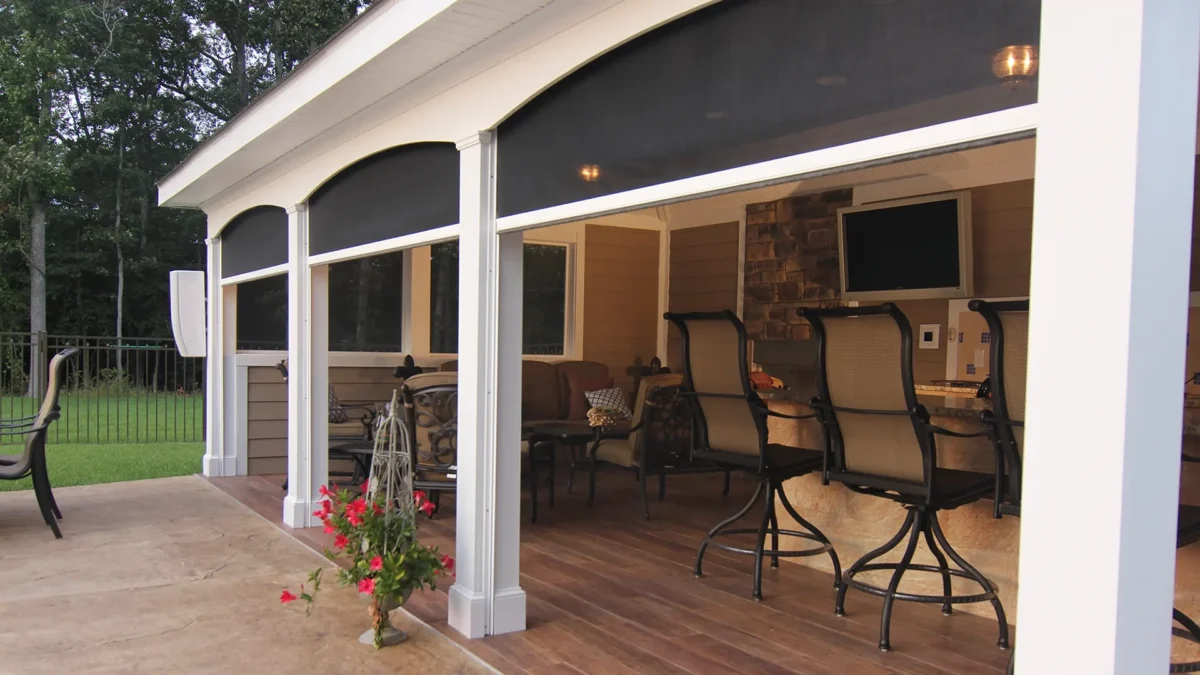
Motorized vs. Manual Garage Screens: Which Option Is Right for Your Home?
Your garage can be much more than a place to park your car. With the right retractable garage screen, it can become a comfortable workshop, home gym, entertainment area, or relaxing space where you can enjoy fresh air without dealing with mosquitoes, flies, and other outdoor pests.
But once you decide to install a garage screen, another question comes up: Should you choose a motorized or manual system?
Both options provide insect protection, ventilation, and the flexibility to open your garage to the outdoors. The main difference is how the screen operates. Manual garage screens require physical operation, while motorized garage screens use an electric motor to raise and lower the screen.
That difference affects convenience, installation requirements, maintenance, and overall cost.
When comparing motorized vs. manual garage screens, the best choice depends on how often you use your garage, the size of the opening, your budget, and the level of convenience you want.
This guide explains how both systems work, compares their advantages and disadvantages, and helps you determine which retractable garage door screen makes the most sense for your home.
What Are Retractable Garage Door Screens?
Retractable garage door screens are screening systems designed to cover a garage opening while allowing air and natural light to pass through.
Unlike permanent garage enclosures, retractable screens can be raised or moved out of the way when they aren’t needed. This allows homeowners to continue using their existing overhead garage doors.
Most retractable garage screens use a mesh material supported by a frame, guide tracks, or other components that help keep the screen aligned.
When the garage door is open, the screen creates a barrier between the indoor space and the outdoors.
This can make your garage more comfortable for activities such as:
- Exercising in a home gym
- Working on woodworking or hobby projects
- Hosting family gatherings
- Creating a recreational space
- Working from a home office in a converted garage
- Enjoying fresh air while reducing insect exposure
Retractable screens are especially useful during warmer months when homeowners want ventilation without leaving the garage completely exposed.
Both manual and motorized garage screens offer these benefits. The primary difference is how you extend and retract the screen.
What Is a Motorized Garage Screen?
A motorized garage screen is a retractable screening system powered by an electric motor.
Instead of manually pulling the screen into position, homeowners use a compatible wall switch, remote control, or another supported control device to operate it.
The motor moves the screen along its guides, allowing it to cover or uncover the garage opening.
Depending on the system, the screen may retract into a housing installed above the opening.
Motorized garage screens are popular for larger openings and spaces that are used frequently.
How Do Motorized Garage Screens Work?
Most motorized retractable garage screens use a motorized roller mechanism.
The screen material is attached to a roller housed near the top of the garage opening. When activated, the motor rotates the roller to extend or retract the mesh.
Guide tracks help keep the screen aligned as it moves.
A typical operating sequence includes:
- Open the existing overhead garage door.
- Activate the retractable screen using the appropriate control.
- Allow the motor to lower the screen into position.
- Enjoy ventilation and insect protection while the screen is extended.
- Retract the screen when you’re ready to close the garage door or use the opening for vehicle access.
Some motorized screening systems offer additional features, such as programmable positions or integration with compatible control systems.
However, available features vary by manufacturer and product model.
Advantages of Motorized Garage Screens
Motorized garage screens offer several benefits, particularly for homeowners who use their garages as living or recreational spaces.
Convenient operation
The biggest advantage is convenience. You can raise or lower the screen without manually moving it across a large opening.
This is useful when entering or leaving the garage frequently.
Ideal for larger openings
Wide garage doors can be more challenging to screen manually. A motorized system provides powered operation, making it a practical option for many double-car and oversized garage openings.
Easy access
Motorized operation can be helpful for homeowners who prefer not to lift, pull, or maneuver a large screen by hand.
Consistent movement
A properly installed motorized system provides controlled screen movement through its operating mechanism.
Additional control options
Depending on the model, motorized screens may offer remote operation or other convenience features.
Disadvantages of Motorized Garage Screens
Motorized garage screens also have considerations that may make them less suitable for certain homeowners.
Higher initial cost
Motorized systems generally cost more than comparable manual screens because they include a motor, controls, and electrical components.
Electrical requirements
Many motorized garage screens require access to a suitable power supply. Installation may involve additional electrical work.
More components to maintain
Motors, control devices, wiring, and related parts introduce maintenance and potential repair needs that manual systems don’t have.
Power dependency
Most standard electrically powered screens cannot operate normally during an outage unless the system includes a compatible backup or manual override feature.
For homeowners who value convenience and frequently use their garage screens, these tradeoffs may be worthwhile.
What Is a Manual Garage Screen?
A manual garage screen is a retractable or movable screening system that operates without an electric motor.
Depending on the design, homeowners may pull the screen down, raise it by hand, slide it along a track, or use another manual operating mechanism.
Manual retractable garage screens provide many of the same benefits as motorized systems, including airflow, insect protection, and flexible garage use.
However, they rely on physical operation rather than powered movement.
How Do Manual Garage Screens Work?
Manual garage screens come in several configurations.
Some use a spring-assisted roller that helps retract the mesh into an overhead housing. Others use tracks, pull handles, or manually operated screen panels.
The operating process depends on the specific product.
For a typical vertically retracting manual screen, the homeowner pulls the screen down into position and secures it using the system’s designated mechanism.
When the screen is no longer needed, the homeowner releases or raises it according to the manufacturer’s instructions.
Because no motor is involved, operation doesn’t require electricity.
Advantages of Manual Garage Screens
Manual garage screens appeal to homeowners who want a straightforward screening solution without the added cost of motorization.
Lower upfront investment
Manual screens generally have a lower initial purchase price than comparable motorized systems.
No electricity required
Manual operation doesn’t depend on electrical power, making these screens suitable for garages where convenient power access is limited.
Fewer mechanical and electrical components
Without a motor or electronic controls, manual systems typically have fewer components that may require specialized servicing.
Straightforward operation
Many manual screens use simple pull or sliding mechanisms that are easy to understand.
Practical for occasional use
If you only use your garage screen occasionally, a manual system may provide everything you need.
Disadvantages of Manual Garage Screens
Manual screens are practical, but they aren’t necessarily the best option for every garage.
Physical effort is required
Depending on the screen size and operating mechanism, raising or lowering the screen may require some effort.
Less convenient for frequent use
If you open and close your garage screen several times each day, manual operation can become inconvenient.
Large openings may be more challenging
Wide screens can be more difficult to handle manually, depending on their construction and design.
Fewer automation features
Manual systems don’t offer powered operation or electronic control features.
For homeowners who prioritize simplicity and affordability, however, a manual retractable garage screen can still be an excellent solution.
Motorized vs. Manual Garage Screens: Side-by-Side Comparison
Understanding the differences between motorized and manual garage screens makes it easier to choose a system that fits your needs.
| Feature | Motorized Garage Screens | Manual Garage Screens |
| Operation | Electric motor | Hand-operated mechanism |
| Initial cost | Generally higher | Generally lower |
| Convenience | High | Depends on screen design |
| Electricity required | Usually yes | No |
| Remote control | Available on compatible models | Not applicable |
| Large openings | Often well-suited | Depends on the product |
| Maintenance | Mechanical and electrical components | Primarily mechanical components |
| Installation | May require electrical work | Typically, fewer electrical considerations |
| Power outages | Operation may be limited | Manual operation remains available |
| Best for | Frequent use and convenience | Budget-conscious or occasional use |
Neither system is automatically better.
A motorized garage screen may be worth the additional investment for a homeowner who uses the garage every day.
Someone who only wants occasional insect protection may find that a manual screen provides better overall value.
How Much Do Motorized and Manual Garage Screens Cost?
Cost is often one of the deciding factors when comparing manual and motorized retractable garage door screens.
The final price depends on several variables, including the size of the opening, screen material, installation conditions, operating mechanism, and product quality.
Motorized systems generally cost more because they require additional equipment and may involve electrical installation.
What Affects the Cost of a Manual Garage Screen?
The price of a manual screen can vary based on:
- Garage opening width and height
- Screen mesh material
- Frame and track construction
- Retraction mechanism
- Standard or custom sizing
- Installation labor
- Mounting surface preparation
A screen designed for a standard single-car garage opening may have different costs than a custom system for a wide double garage.
What Affects the Cost of a Motorized Garage Screen?
Motorized garage screen pricing includes many of the same factors, along with additional components.
These may include:
- Electric motor and roller mechanism
- Remote controls or wall switches
- Electrical connections
- Specialized mounting hardware
- Additional control features
- Professional installation
- Custom screen dimensions
The larger the garage opening, the more important it becomes to select a motor and screen system designed for that particular application.
Are Motorized Garage Screens Worth the Extra Money?
Motorized garage screens can be worth the additional cost when convenience is a priority.
For example, consider a homeowner who uses the garage as a fitness space every morning.
If the screen is raised and lowered daily, powered operation can save time and make the space easier to use.
Now consider someone who only opens the garage screen a few weekends each month.
In that situation, the convenience of a motorized system may not justify the higher initial investment.
The better question isn’t simply which screen costs less. It’s which screen offers the most value based on how you plan to use your garage.
Which Garage Screen Is Better for a Single-Car Garage?
Single-car garage openings are often well-suited for manual retractable screens because the opening is relatively narrow.
Common single-car garage doors measure approximately 8 to 10 feet wide, although actual dimensions vary.
For a homeowner who uses the garage as a workshop or occasional recreational area, a manual screen may be sufficient.
The smaller opening can make manual operation more manageable, depending on the screen design.
However, a motorized garage screen may still be preferable if you use the space frequently or want convenient powered operation.
A single-car garage doesn’t automatically require one type of screen over the other.
The decision depends on the product’s supported dimensions and your personal preferences.
Which Retractable Screen Is Best for a Double Garage Door?
Double-car garage doors often measure 16 or 18 feet wide.
These larger openings require screening systems specifically designed to span the width safely and operate reliably.
Motorized garage screens can be particularly attractive for double garages because the motor handles the movement of the screen.
This reduces the need to manually operate a large screening surface.
However, some manual screen systems are also designed for wide openings.
Before choosing a screen for a double garage, confirm the manufacturer’s maximum supported width and height.
You should also consider the garage’s mounting clearance, frame construction, and the location of the existing overhead door tracks.
For especially large openings, professional measurement and installation planning are important.
Which Garage Screen Is Easier to Install?
Installation requirements vary based on the product and the garage itself.
Both manual and motorized retractable screens need secure mounting surfaces and proper alignment.
The screen must also operate without interfering with the existing overhead garage door.
Installing a Manual Retractable Garage Screen
Manual garage screens typically don’t require electrical connections.
This can simplify installation.
However, the installer must still measure the opening accurately, position the screen housing or frame, and align the operating components.
Depending on the system, installation may involve mounting brackets, guide tracks, fasteners, and tension adjustments.
An uneven garage opening or limited mounting space can make installation more complicated.
Installing a Motorized Retractable Garage Screen
Motorized screens require many of the same installation steps, along with additional considerations.
The motor must be properly installed and connected to a suitable power supply.
Control devices may also need to be configured.
Depending on the screen, installation may involve setting operating limits so the mesh stops at the correct positions.
Professional installation is often beneficial for large motorized systems because correct alignment and setup are essential for reliable operation.
Do Motorized Garage Screens Require More Maintenance?
Both types of garage screens benefit from regular cleaning and inspection.
Dust, dirt, leaves, and other debris can accumulate around the mesh and guide tracks.
Over time, this buildup may interfere with smooth operation.
Maintenance for Manual Garage Screens
Manual screens typically require basic maintenance, such as:
- Cleaning the screen mesh
- Removing debris from tracks
- Inspecting handles and latches
- Checking the retraction mechanism
- Looking for loose mounting hardware
Depending on the product, spring-assisted mechanisms may eventually need professional adjustment or replacement.
Maintenance for Motorized Garage Screens
Motorized screens require similar cleaning and inspection.
They may also need attention to electrical or powered components.
Maintenance can include checking the operation of controls, inspecting visible wiring for damage, and confirming that the screen moves smoothly.
Unusual noises, uneven movement, or repeated stopping may indicate that the system needs professional service.
Never force a motorized screen that appears jammed.
Which Type Lasts Longer?
The lifespan of a retractable garage screen depends on the quality of its components, frequency of use, installation conditions, and maintenance.
Neither manual nor motorized operation guarantees a longer service life.
A well-made motorized screen that is properly installed and maintained may provide years of reliable use.
The same is true for a quality manual screen.
Screen mesh condition, track alignment, environmental exposure, and operating habits all influence durability.
Are Motorized Garage Screens Better for Everyday Use?
If you use your garage as an extension of your living space, convenience becomes especially important.
Imagine turning your garage into a home gym.
You open the overhead door each morning to let fresh air inside. Then you lower the screen to keep insects out while exercising.
With a motorized system, this process can be completed using a control device.
With a manual screen, you need to operate the screen yourself.
Both approaches work, but motorized operation can be more convenient when repeated frequently.
The same principle applies to garages used for hobbies, entertainment, or everyday relaxation.
If your garage screen will be opened and closed several times a day, motorization may be a worthwhile investment.
Can Motorized Garage Screens Be Used With Smart Home Systems?
Some motorized retractable screen systems can work with compatible automation or smart home controls.
Depending on the manufacturer, available features may include remote operation, programmable settings, or integration with supported control equipment.
However, not every motorized garage screen offers smart home connectivity.
Before purchasing, confirm which control options are available for the specific screen model.
It’s also important to distinguish a retractable garage screen from an automatic garage door opener.
The screen and overhead garage door are separate systems. Their controls and operating requirements may differ.
Any automation should account for safe operation, visibility of the opening, and the manufacturer’s instructions.
Do Garage Screens Provide Privacy?
Both motorized and manual garage screens can provide some visual separation between the garage and the outdoors.
However, the amount of privacy depends primarily on the mesh material, lighting conditions, and screen design rather than the operating mechanism.
Standard insect mesh is generally intended to provide airflow and insect protection, not complete privacy.
During daylight hours, some screen materials may reduce visibility into the garage.
At night, interior lighting can make the space easier to see from outside.
If privacy is important, ask about mesh options specifically designed to provide greater visual screening.
Keep in mind that denser mesh may also affect airflow and visibility.
Can Retractable Garage Screens Help Keep Your Garage Cooler?
A retractable garage screen can make a garage more comfortable by allowing outdoor air to circulate while helping keep insects out.
This can be particularly useful during mild weather or when there is a breeze.
However, the screen itself doesn’t function like an air conditioner.
Its cooling benefit comes primarily from ventilation and, depending on the mesh, some reduction in direct sunlight.
The actual temperature difference depends on outdoor conditions, airflow, sun exposure, and the garage’s construction.
Both manual and motorized screens can provide similar ventilation benefits when equipped with comparable mesh.
Choosing motorized operation doesn’t automatically improve cooling performance.
Are Retractable Garage Screens Good for Home Gyms and Workshops?
Garages are increasingly used for activities that go beyond parking and storage.
A retractable screen can help make these spaces more comfortable while maintaining their flexibility.
Garage Screens for Home Gyms
Exercise equipment often takes up considerable space, making the garage a practical location for a home gym.
Opening the overhead garage door can improve airflow during workouts.
A retractable screen allows ventilation while helping reduce insects entering the space.
Motorized screens are particularly convenient for homeowners who exercise frequently.
Manual screens may be a practical choice for occasional workouts.
Garage Screens for Workshops
Woodworking, repairs, and other hobby projects often benefit from natural ventilation.
A garage screen allows air to move through the opening while creating a barrier against flying insects and larger debris.
However, a screen is not a substitute for appropriate dust collection, exhaust ventilation, or other safety equipment when working with fumes or airborne particles.
Both manual and motorized screens can be useful in workshop settings.
Garage Screens for Entertainment Areas
Some homeowners transform their garages into gathering spaces with televisions, seating, and recreational equipment.
Retractable screens can make these spaces feel more connected to the outdoors.
Motorized operation may be especially convenient when hosting guests because the screen can be raised or lowered with minimal effort.
What Should You Look for When Buying a Retractable Garage Screen?
Before deciding between manual and motorized operation, consider the overall quality and suitability of the screen system.
Screen Mesh Quality
The mesh should be appropriate for the intended application.
Look for material that provides the airflow, visibility, and insect protection you need.
The available mesh options may vary by product.
Frame and Track Construction
The frame and guide components help support the screen and maintain alignment.
Choose a system designed for the dimensions and operating conditions of your garage.
Maximum Opening Size
Not all retractable screens can cover the same width or height.
Confirm that the system is rated for your garage opening.
Mounting Requirements
Measure the available space above and around the garage door.
Some screens require additional clearance for the housing or side tracks.
Ease of Operation
Consider how often you’ll use the screen.
If convenience is important, motorized operation may be worth the additional investment.
If simplicity is your priority, a manual system may be a better fit.
Maintenance and Replacement Parts
Ask about recommended maintenance, available replacement components, and service options.
A screen that can be properly maintained is a better long-term investment.
How to Measure Your Garage Door Before Choosing a Screen
Make sure you measure your garage door. Accurate measurements are essential regardless of whether you select a motorized or manual garage screen.
Start by measuring the width of the clear garage opening at three locations: top, middle, and bottom.
Then measure the height at the left side, center, and right side.
Record each measurement rather than assuming the opening is perfectly square.
Next, check the available mounting space above and beside the opening.
Look for obstructions such as garage door tracks, brackets, wiring, and overhead storage.
For motorized screens, also consider the location of electrical connections.
The final screen dimensions will depend on the manufacturer’s mounting requirements.
If you’re uncertain about the measurements, professional assistance can help ensure that the selected screen fits properly.
Motorized vs. Manual Garage Screens: Which Should You Choose?
The right garage screen depends on your priorities.
A motorized system offers convenience and can be particularly useful for frequently used spaces or larger openings.
A manual system provides a straightforward alternative that generally costs less and doesn’t require electricity.
Choose a Motorized Garage Screen If:
- You use your garage as a living or recreational space every day.
- You want convenient, powered operation.
- You have a large garage opening and prefer not to operate the screen manually.
- You want compatible remote-control features.
- You’re comfortable with the additional purchase and installation costs.
Choose a Manual Garage Screen If:
- You want a more budget-friendly screening solution.
- You only use the screen occasionally.
- You prefer a system without electrical components.
- Your garage has limited access to electricity.
- You want a straightforward operating mechanism.
For many homeowners, the decision comes down to how often they expect to use the screen.
A garage that serves as an everyday extension of the home may benefit from motorization.
A garage that only needs screening on weekends may be perfectly suited to a manual system.
Why Choose Stoett for Your Retractable Garage Screen?
Choosing the right garage screen involves more than deciding between manual and motorized operation.
The screen must fit your opening, work with the existing garage door, and provide the ventilation and insect protection you expect.
Stoett specializes in retractable screening solutions designed to make indoor and outdoor spaces more functional.
Whether you’re planning to screen a garage, doorway, or another opening, selecting the right product starts with understanding your space and how you intend to use it.
Stoett offers retractable garage screens, retractable door screens, and other screening products for residential applications.
The company also provides glass railing and glass screen solutions for homeowners looking to enhance other areas of their property.
If you’re considering a retractable garage screen, explore Stoett’s available products and discuss your opening dimensions, mounting conditions, and operating preferences.
The right system can help transform your garage into a more comfortable and versatile space without sacrificing its everyday functionality.
Give our team a call today at (419) 542-0247 or reach out online here.
Review our project portfolio.
Frequently Asked Questions About Motorized vs. Manual Garage Screens
Are motorized garage screens better than manual garage screens?
Motorized garage screens are generally more convenient because they use an electric motor to raise and lower the screen. Manual garage screens typically cost less and don’t require electricity. The better option depends on your budget, garage size, and how often you use the screen.
What is the difference between motorized and manual garage screens?
The main difference is the operating mechanism. Motorized garage screens use an electric motor and compatible controls, while manual screens require physical operation. Both can provide insect protection, airflow, and flexible use of the garage opening.
How much does a motorized garage screen cost compared to a manual screen?
Motorized garage screens generally cost more than comparable manual systems because they include motors, controls, and electrical components. Actual pricing depends on the opening size, screen material, installation conditions, and product specifications. Custom quotes provide the most accurate comparison.
Are motorized retractable garage screens worth it?
Motorized retractable garage screens can be worth the investment for homeowners who use their garages frequently. Powered operation makes it easier to raise and lower the screen, especially across larger openings. For occasional use, a manual screen may offer better value.
Can you install a retractable screen on an existing garage door?
Yes. Many retractable garage screens are designed to work alongside existing overhead garage doors. The screen operates as a separate system, allowing homeowners to keep their garage door while adding ventilation and insect protection.
Do motorized garage screens need electricity?
Most motorized garage screens require electricity to operate. Some systems may offer backup power or manual override options, but availability depends on the model. Manual garage screens don’t require electrical power.
Can you manually operate a motorized garage screen during a power outage?
Some motorized screen systems include a manual override or backup operating feature. Others cannot operate normally without power. Check the manufacturer’s specifications to determine whether manual operation is supported.
Are manual garage screens difficult to open and close?
Many manual garage screens are designed for straightforward operation. However, the effort required depends on the screen’s size, weight, and operating mechanism. Larger screens may require more effort than smaller systems.
What type of garage screen is best for a two-car garage?
Motorized garage screens are often a convenient choice for two-car garages because they provide powered operation across a wide opening. However, certain manual systems may also be suitable. The screen must be designed for the garage’s actual dimensions.
How long do retractable garage screens last?
The lifespan of a retractable garage screen depends on its materials, construction, installation quality, maintenance, and frequency of use. Regular cleaning and proper operation can help extend the life of both manual and motorized systems.
Can motorized garage screens connect to a smart home system?
Some motorized garage screens offer compatibility with supported automation or control systems. Features vary by manufacturer and model. Confirm smart home compatibility before purchasing.
Do retractable garage screens keep mosquitoes and bugs out?
A properly fitted retractable garage screen helps prevent mosquitoes, flies, and other flying insects from entering while allowing fresh air to circulate. Effective insect protection depends on the mesh, installation quality, and how well the screen seals around the opening.
Can garage screens stay down when it’s windy?
Wind resistance depends on the screen’s design, mounting system, mesh, and manufacturer specifications. Some systems are engineered for greater wind resistance than others. Follow the manufacturer’s operating guidelines and retract the screen when conditions exceed its rated limits.
Are motorized garage screens noisy?
A properly functioning motorized garage screen generally produces some sound while operating. Noise levels vary based on motor design, screen size, installation quality, and maintenance. Unusual grinding or rattling noises may indicate that the system needs attention.
Which garage screen requires less maintenance?
Manual garage screens generally have fewer electrical and powered components to maintain. However, both manual and motorized screens require regular cleaning, track inspection, and proper care to maintain reliable operation.
Can retractable garage screens provide privacy?
Retractable garage screens may provide some visual separation, but privacy depends on the mesh material and lighting conditions. Standard insect mesh doesn’t provide complete privacy. Some screen materials offer greater visual screening than others.
Should I choose a manual or motorized garage screen for a home gym?
If you use your garage gym daily, a motorized screen may be more convenient because it can be operated with minimal effort. If you exercise in the garage only occasionally, a manual screen may provide the ventilation and insect protection you need at a lower cost.
Where can I find retractable garage screens for my home?
Stoett offers retractable screening solutions for garage openings, doors, and other residential spaces. Visit stoett.com to explore available products and learn more about selecting a retractable screen for your garage.